Story
What the action reveals, changes or makes the audience feel.
Independent field guide to physical action for screen
Stunt design is the end-to-end creative and technical process of turning story-driven action into a controllable, performable and filmable sequence—from concept and coordination to camera and final cut.
Character, stakes, geography, escalation, movement language and visual rhythm are translated into a physical concept.
Read this disciplineCharacter, stakes, geography, escalation, movement language and visual rhythm are translated into a physical concept.
Read this disciplineThe working definition
It is not simply an isolated physical feat performed for a camera. It is the complete design of physical action: why it happens, how it works, how people prepare it, how it is controlled and how the audience experiences it.
Stunt.Design working definition“Stunt design is the end-to-end creative and technical process of turning story-driven action into a controllable, performable and filmable sequence. It connects narrative intent, action direction, choreography, coordination, engineering, structured risk management, camera strategy, effects and editorial planning.”
This is an independent editorial definition—not an official Academy definition.
What the action reveals, changes or makes the audience feel.
What bodies, vehicles, objects and cameras physically do.
How complexity is prepared, communicated and made repeatable.
How performance, camera, effects, sound and edit become one experience.
What stunt design includes
Professional screen action is built across creative, operational and cinematic decisions. These five groups make the complete process easier to understand without treating those departments as interchangeable.
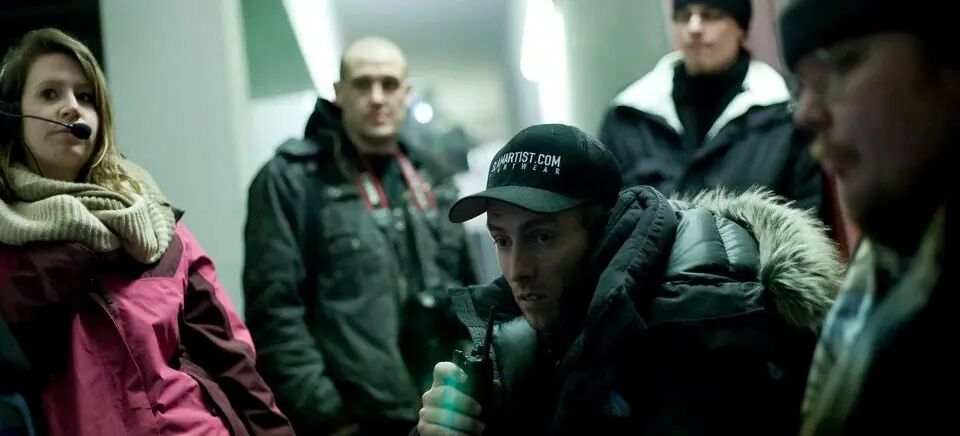
Conceive · Dramaturgy · Direction
Define what the action means before deciding how it moves. Character, stakes, geography, escalation, movement language and visual rhythm are translated into a physical concept.
Break down · Test · Control
Turn the concept into a controllable production plan. Feasibility, people, equipment, schedule, locations, rehearsals, communication and risk controls are designed together.
Choreograph · Engineer · Perform
Build precise physical behavior for performers, vehicles and rigs. Stunt performance, doubles, fights, falls, rigging, vehicles and specialist disciplines turn intent into repeatable action.
Visualize · Rehearse · Refine
Make the sequence visible, testable and adjustable before the take. Previs, stuntvis, techvis, blocking, tests and rehearsals expose creative and technical problems while they are still solvable.
Capture · Integrate · Finish
Design the real action for the frame, the edit and the audience. Camera paths, lenses, coverage, SFX, VFX, continuity, sound and editorial rhythm shape how physical action becomes a screen experience.
From page to frame
The process is iterative rather than perfectly linear. A location, performer, lens, rig test or edit may send the team back to an earlier decision. Good design makes that learning visible early.
Identify the character objective, dramatic beat, tone, stakes and reason the action exists.
Translate the pages into movement, geography, beats, specialist requirements and production questions.
Test the idea against performers, locations, equipment, budget, schedule and local requirements.
Explore blocking, rhythm and coverage; use techvis where measurements, lenses or camera paths matter.
Select specialists, cast or double performers, train actors and align every affected department.
Build, test and refine rigs, vehicles, effects, choreography, communications and contingencies.
Brief the set, establish controls and abort logic, then execute repeatable action for usable coverage.
Protect screen direction, impact, continuity and performance through editorial, VFX, sound and final review.
Who does what?
Stunt design is collaborative authorship. The names below describe common areas of responsibility—not a universal chain of command. Credits and legal responsibilities must be read in their production context. Unit labels describe organization; they do not automatically reveal which unit is larger or where the film’s principal narrative work happens.
Overarching creative and technical authorship of an action sequence or body of work. The credit is emerging and is not globally standardized.
Shapes the sequence’s dramatic concept, physical language, geography, escalation and rhythm with the director and relevant departments. The scope and credit vary widely.
Leads the stunt department’s operational planning, people, equipment, testing, rehearsals, execution and risk controls.
Directs the narrative, performance and cinematic execution of action-led material, whether organized as the Action Unit, First Unit or an additional unit. “Second Unit” is an organizational label—not a measure of scale or story importance.
Fight, vehicle, rigging, water, fire, aerial and other coordinators or engineers lead discipline-specific design and control.
Delivers the physical performance, often contributing specialist judgment, character movement and repeatability to the design.
Director, DP, camera, production design, locations, SFX, VFX, sound and editorial collaborate on what the audience finally experiences.
An independent evaluation framework
Scale, danger and cost do not automatically equal quality. A useful evaluation looks at the relationship between dramatic purpose, physical execution and the final cinematic result.
Does the action reveal character, change the story or intensify a dramatic beat?
Can the audience understand geography, cause and effect, intention and consequence?
Does the design find a specific, necessary solution rather than spectacle without context?
Does the movement feel committed, precise, character-specific and believable in the chosen screen language?
Was complexity converted into a prepared, communicable and repeatable production system?
Do lenses, camera movement, coverage, continuity, effects, sound and cutting preserve the physical idea?
Do practical action, SFX, VFX, art, costume, vehicles and locations support one coherent result?
Does the finished sequence create the intended emotion—not merely display difficulty or danger?
The new Academy category
The Academy of Motion Picture Arts and Sciences has established an annual competitive Academy Award® for Achievement in Stunt Design. The category begins with the 100th Academy Awards and first recognizes films released in 2027.
Last reviewed 11 July 2026. The Academy says full eligibility and voting rules will be published in 2027. This guide will need updating when those rules are released.
Stunt.Design is an independent educational resource. It is not affiliated with or endorsed by the Academy of Motion Picture Arts and Sciences. “Best Stunt Design” is a common search phrase, but the announced formal category name is “Achievement in Stunt Design.”
Questions people are asking
Short answers for readers, researchers and production teams. Open any question for the full explanation.
Stunt design is the end-to-end creative and technical process of telling a story through physical action. It connects dramatic intent, action direction, performance, choreography, stunt coordination, engineering, structured risk management, camera, effects and editorial planning. In an action-led film, that work may carry central character beats and plot turns—not merely provide spectacle between dialogue scenes.
No. Stunt coordination is a defined operational leadership responsibility within the wider process: people, equipment, preparation, rehearsals, execution and controls for the stunt department. Stunt design also includes narrative purpose, action direction, unit architecture, camera strategy, effects integration and the final screen result. One person may contribute to both; titles and scopes vary by production.
A stunt designer helps shape the complete physical-action idea—from story purpose, movement language and unit strategy to feasibility, specialist systems, camera logic and the final screen result. The title is not yet standardized worldwide, so elements of this work may instead appear under action design, action direction, stunt coordination or unit-direction credits.
An Action Director directs the dramatic, performance and cinematic execution of action-led material and may lead an Action Unit. A Stunt Coordinator leads the stunt department’s planning, preparation, personnel and controlled execution. The roles collaborate closely and may overlap, but neither title should be assumed to contain the other; contracts, territory and production structure define the boundary.
No. “Second Unit” describes an additional production unit; “Action Unit” describes what that unit is built to create. On some productions they are the same. On action-led films, the Action Unit may instead be the First Unit, the largest unit or the unit carrying the principal narrative, while a separate Drama Unit handles selected non-action-led scenes. Numbering remains valid, but it does not by itself express creative priority.
Yes. Action can reveal character, change relationships, deliver plot turns, establish stakes and create consequences. When physical action carries that much narrative, it requires actor direction, dramatic continuity, camera and editorial authorship as well as specialist execution. That is why an Action Unit can be a principal storytelling unit rather than only a supplementary coverage unit.
The Academy Award for Achievement in Stunt Design begins with the 100th Academy Awards, recognizing films released in 2027. The ceremony is scheduled for 5 March 2028; the award’s presentation specifics have not yet been announced.
That has not yet been officially defined. The Academy says detailed eligibility and voting rules will be published in 2027. Until then, claims about eligible recipients or statuette limits are speculation.
The Academy has not yet published formal judging or evaluation criteria. The framework on this page is an independent practitioner framework for understanding the craft, not an Academy rubric.
As early as the story and schedule allow. Early involvement gives the team more options to align dramatic intent, locations, casting, training, engineering, camera coverage, effects, budget and time before expensive decisions become fixed.
Previs broadly visualizes a sequence. Stuntvis is typically performance-led footage used to explore choreography, blocking and rhythm. Techvis adds production measurements such as lenses, camera paths, rig geometry and timing. Usage varies between teams.
No. Effective stunt design chooses and integrates the right methods for the story, performers and production. Practical action, practical special effects (SFX), visual effects (VFX), digital doubles, removals and extensions can all contribute to one coherent result.
No. Preparation and control enable precision, repeatability and better creative choices. No complex action is risk-free; professional design aims to identify, reduce and manage risk under the requirements that apply to that production.
Stunt Design in practice
These examples are presented as practitioner evidence, not claims of sole sequence authorship. Each card states Ferdi Fischer’s relevant contribution and a design relationship worth observing.
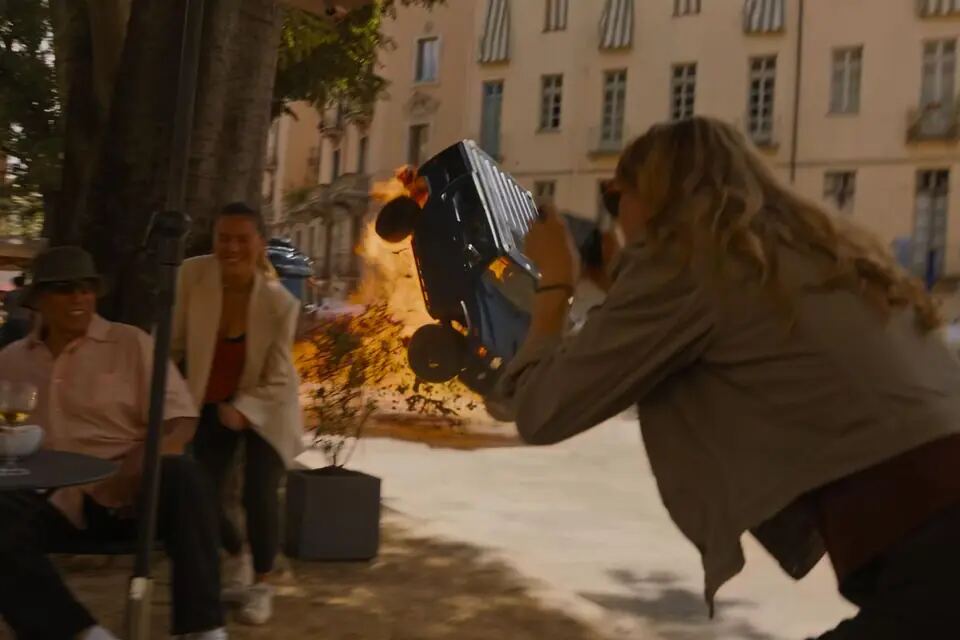
Rome · Vehicle action
Practice lens: vehicle choreography, camera proximity and editorial continuity. Ferdi Fischer’s work included stunt performance, precision driving and WarpCam® action-camera operation.
Watch selected work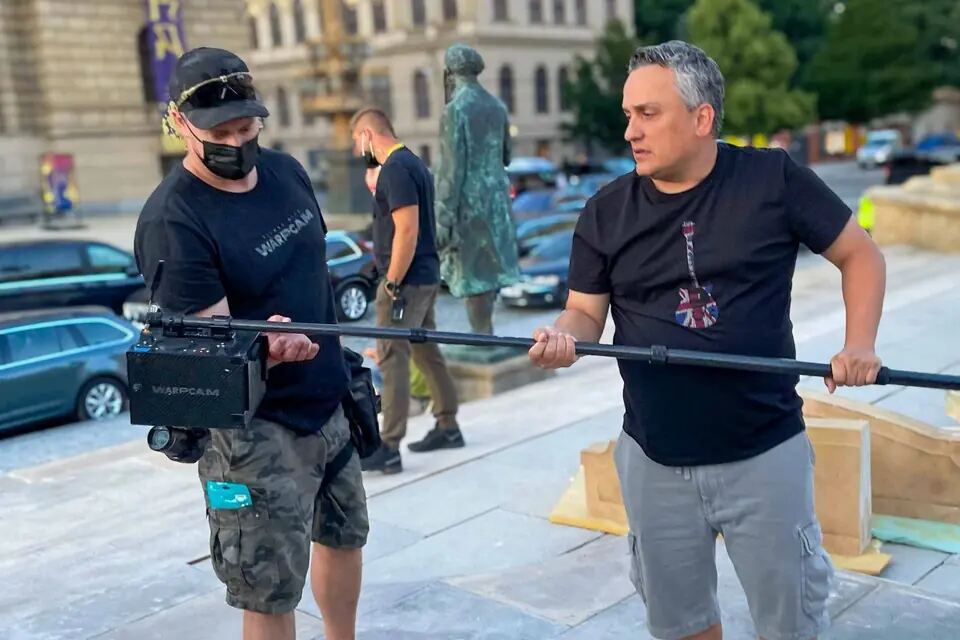
Prague · Multi-unit action
Practice lens: performance, camera movement and splinter-unit coordination. Ferdi Fischer’s work included stunt performance, WarpCam® operation and splinter-unit action direction.
Watch selected work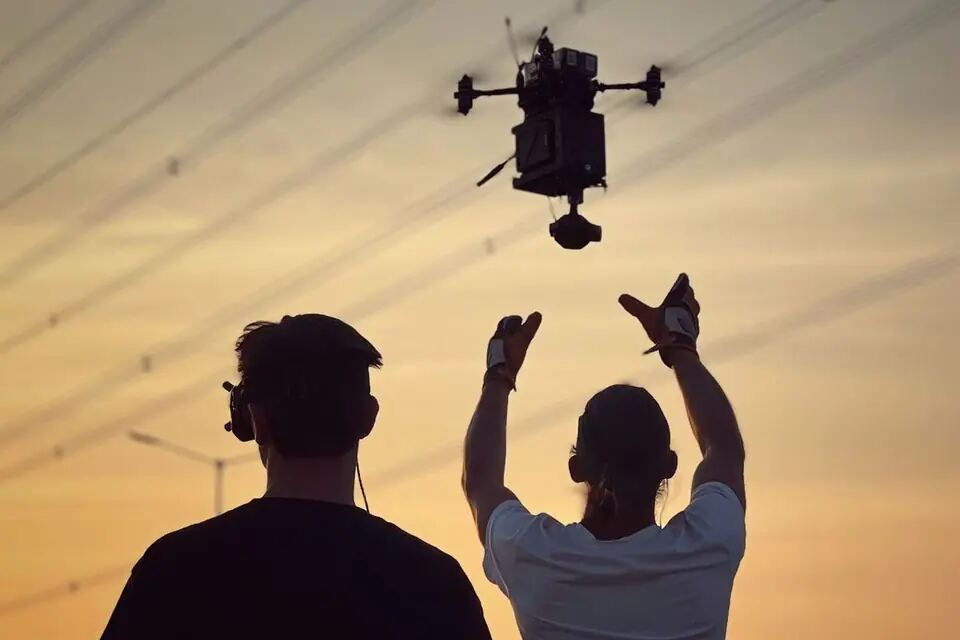
Mumbai · Large-scale action
Practice lens: specialist capture inside large-scale action. Ferdi Fischer’s work included WarpCam® operation, stunt performance and FPV integration.
Read the WarpCam® BTS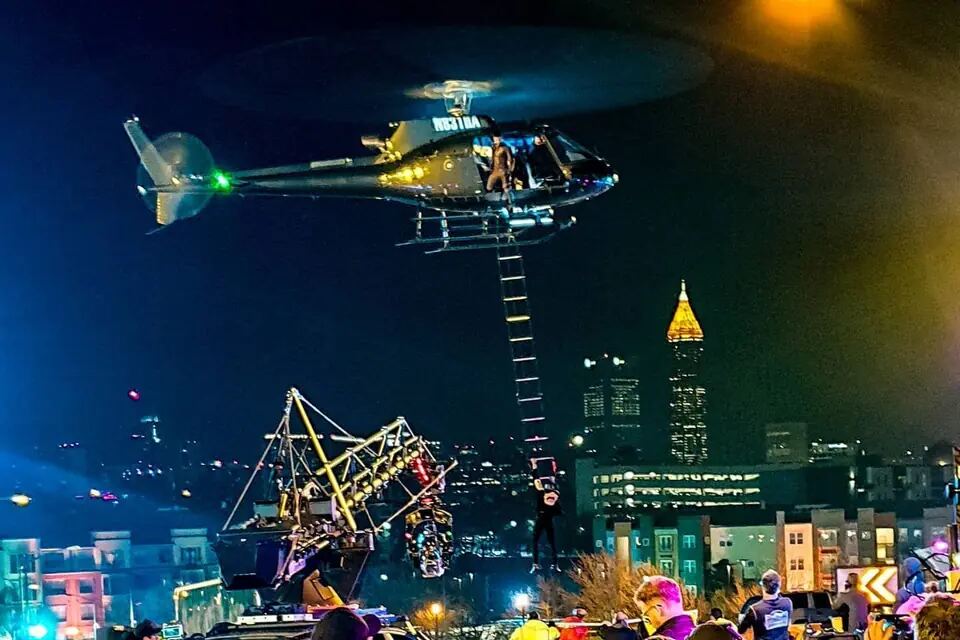
Atlanta · Feature action
Practice lens: physical performance and operated action-camera capture. Ferdi Fischer’s work included stunt performance and WarpCam® operation.
View selected workOne applied model
Stunt design becomes most useful when it can move from authorship to an integrated production system. The SlamArtist.com Universe is one practitioner-led model: Action Directing shapes the story; Stunt Coordination turns it into controlled execution; the WarpCam® ecosystem integrates camera with physical action; TAC-CINE applies the model to tactical narratives; and Precision Driving extends it into vehicle work.
Applied system / Camera & editorial integration
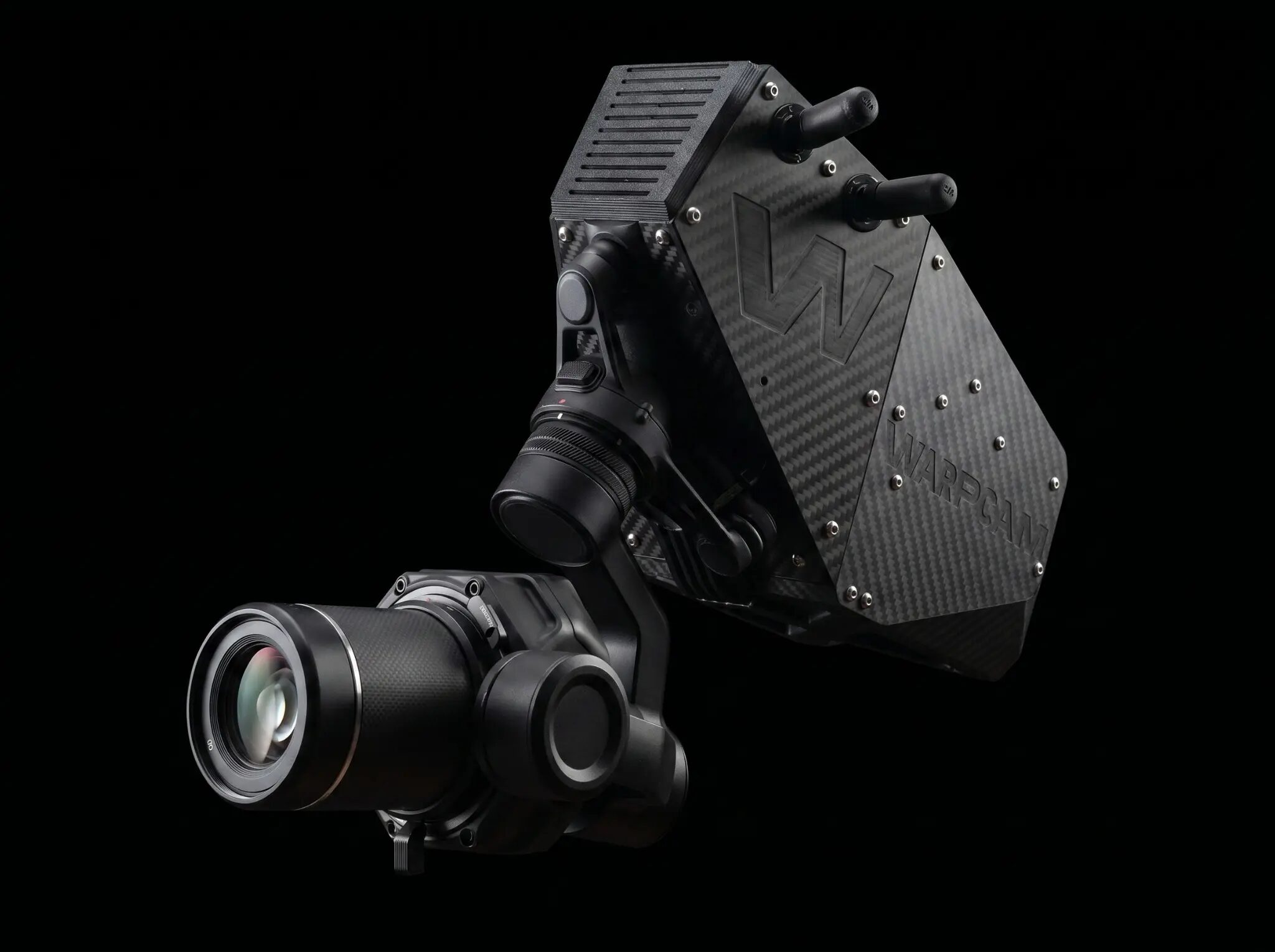
The camera physically participates in the action.
An example of stunt design extending into capture: close-proximity camera movement built around real performance, production control and the final cut.
Explore the operated systemDesigned · Operated · Deployed
WarpCam® illustrates a central stunt design principle: physical action and camera logic work better when they are developed together. It is not offered as isolated gear; it is deployed as an operated ecosystem integrated with the Action Unit, camera department and editorial intent.
Connect the dramatic beat, physical action, camera path, risk, resources and editorial logic.
Bring an operated camera ecosystem into the action and integrate it with the departments already in place.
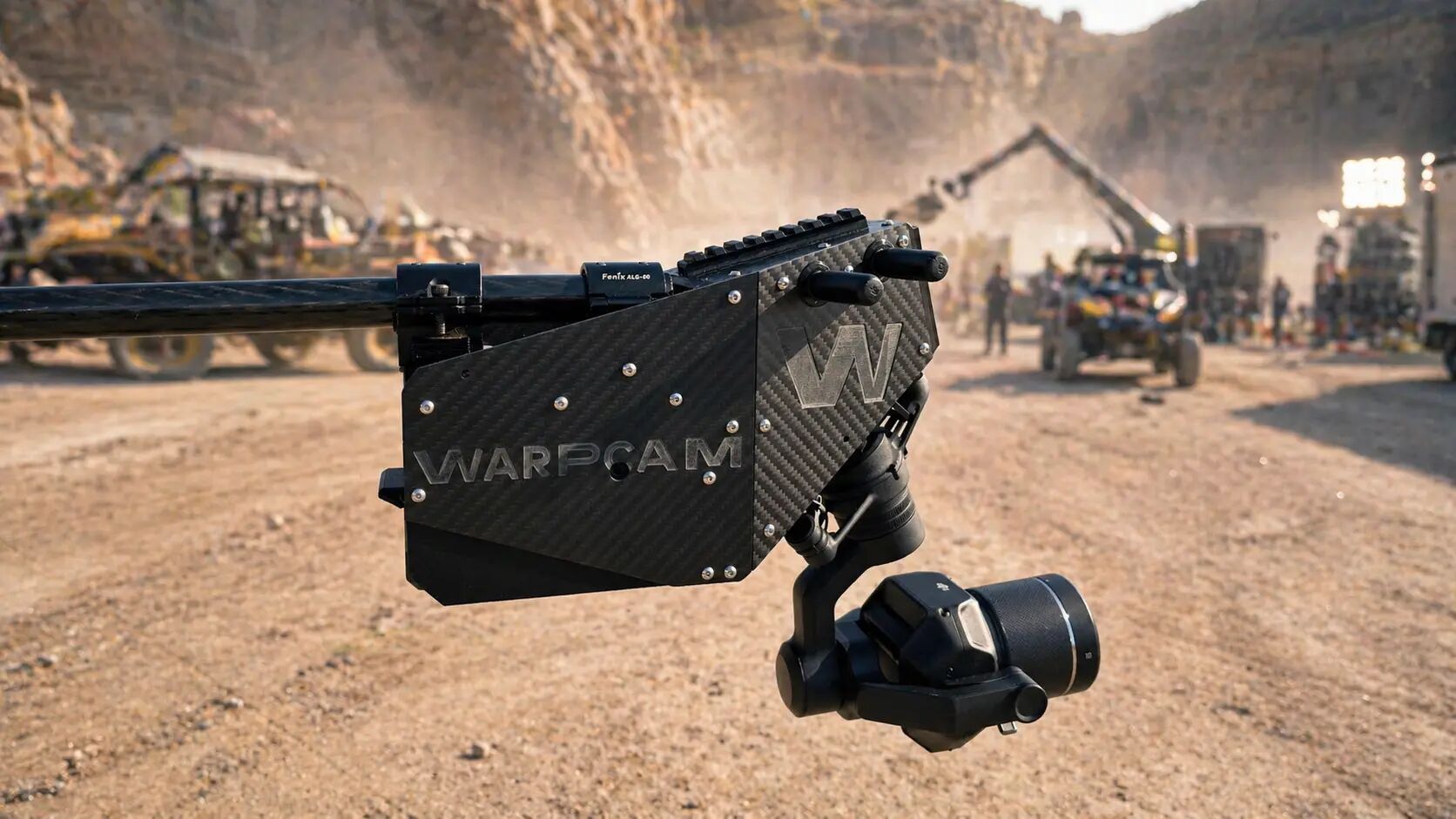
Create close, stable and cuttable coverage built around the real performance—not around isolated gear.
 Field deployedReal set · Integrated Action UnitBuilt for the shot.
Sources, method & updates
Stunt.Design is an educational resource written by Ferdi Fischer, published by SlamArtist.com and grounded in his field practice. Editorial definitions and evaluation tools are labeled as independent. Academy facts link to their supporting sources; safety guidance links to industry bulletins. Corrections and updates are made when authoritative information changes.
Last reviewed: 11 July 2026 · Next required review: when the Academy publishes the 100th Academy Awards rules in 2027.For productions that need the work
If your project needs action direction, stunt coordination, specialist capture, precision driving or an integrated physical-action approach, share the dramatic problem and production reality.
Discuss a sequence